
How Trip Turbo Became Nepal’s #1 Travel App | 500k+ Downloads
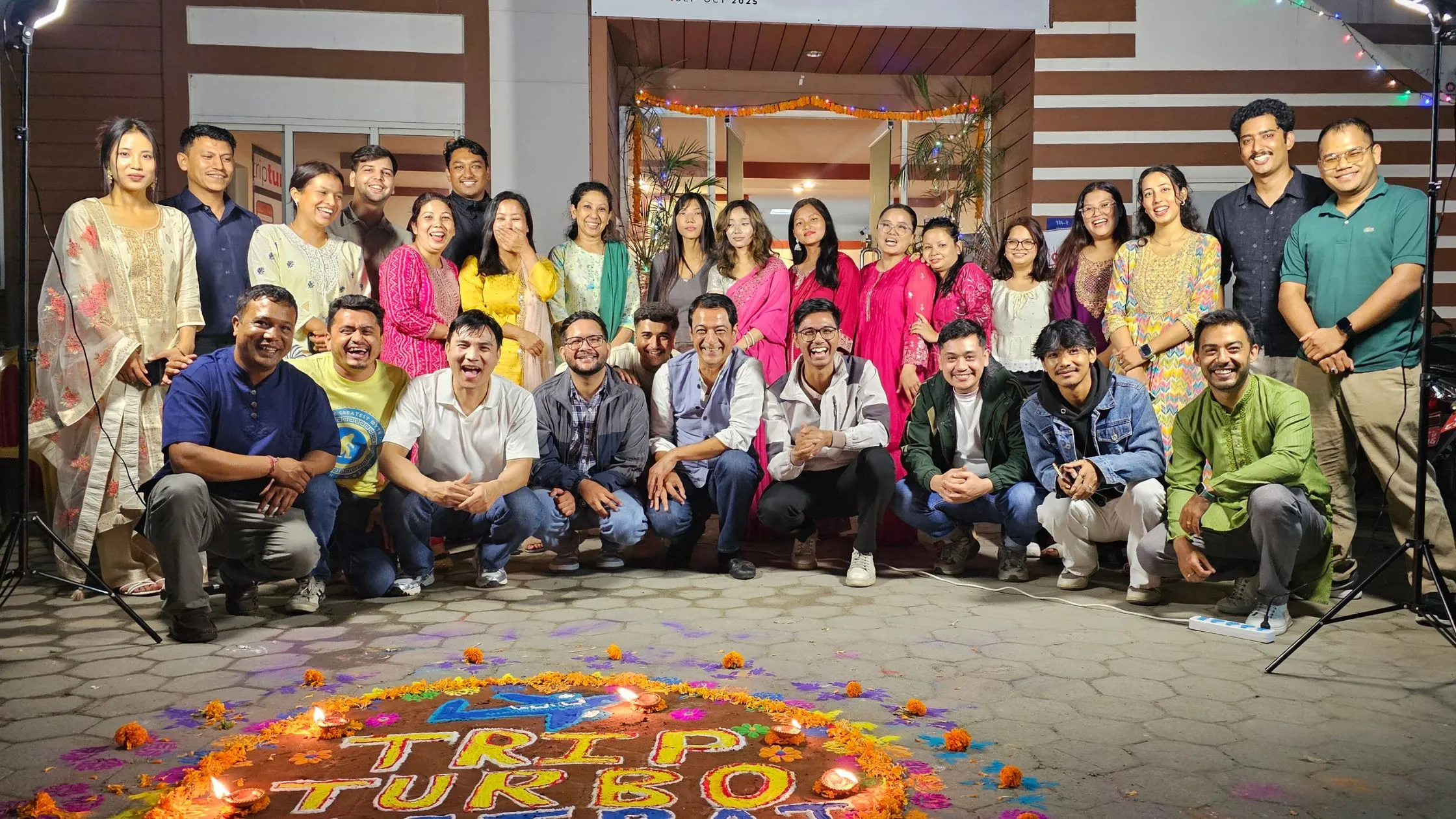
If you look at Trip Turbo today, you will see a smooth, feature-rich app. You will see Nepal’s #1 Travel App with over 500K+ downloads (Play Store and App Store combined). You will see a bustling team of over 35 passionate people working behind the scenes.
Table of Contents
- The Milestones at a Glance
- The Beginning
- Travel Mela 2024: Launching Nepal’s Biggest Online Travel Campaign
- Never Resting: The Secret to Our Growth
- Building Nepal’s Largest Travel Marketplace (B2C & B2B)
- Introducing TT Coins
- Overcoming Fears & Winning the ICT Award 2025 🏆
- Scaling Through Tech Partnerships: The Nabil Bank Integration
- Looking Ahead to the Future
- The App Growth Framework: What Actually Drove 500K Downloads
- 5 Lessons for Nepal App Founders
- Building or scaling a mobile app in Nepal?
- Checkout services I offer:
- Further Reading
Through our app (available on Play Store and App Store) and website, users can book domestic and international flights, bus tickets to 70+ districts across Nepal and India, global hotels, and over 200+ unique activities right from their couches.
But the reality of how we got here is much wilder.
Today, as the Lead of Growth and Marketing at Trip Turbo, I want to take a step back and share our real story. This is a story about crazy experiments, late nights, and the power of teamwork. And at the end, I’ll break down the exact App growth framework we used — so every app founder in Nepal can take something useful from it.
The Milestones at a Glance
Before getting into the story, here are the hard numbers — because growth without data is just a story.
| Milestone | When | Team Size | Key Driver |
|---|---|---|---|
| Public Launch | Early 2024 | 2 (marketing team) | Travel Mela 2024 GTM campaign |
| 100,000 downloads | December 2024 | Under 10 | 360-degree launch campaign + paid acquisition |
| 200,000 downloads | May 2025 | Growing | Travel Mela 2025 + retention + partnerships |
| 500,000 downloads | April 2026 | 35+ | Compounding growth + B2B integrations + TT Coins |
450,000 of those downloads are on Android. 70,000 are on iOS. The journey from 0 to 100K took roughly a year of heavy lifting. From 100K to 500K took 16 more months — but the growth accelerated significantly as each channel compounded on the others.
The Beginning
Although Trip Turbo was officially registered in 2021, our real “bang” happened when we officially launched to the public with our massive campaign: Travel Mela 2024.
At the time, our Growth and Marketing team was just two people.
Yes, you read that right. Just me and Rupak dai. I cannot thank Rupak dai enough for being not just the best colleague, but a brother through it all.
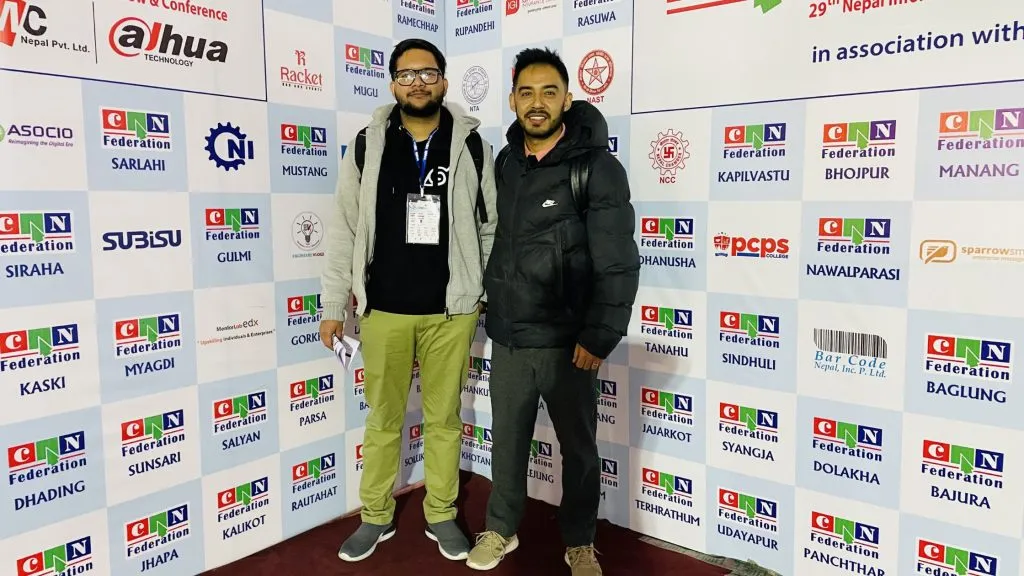
Bimal Raj Paudel and Rupak Khadka at CAN Info Tech.
Those days were a beautiful kind of chaos. We were handling everything ourselves. We set up Facebook and Google paid ads, wrote the advertising copies, sent out mass SMS blasts, and physically drove out to visit local vendors to print marketing flyers and banners. It was one hell of a ride!
Travel Mela 2024: Launching Nepal’s Biggest Online Travel Campaign
To make Trip Turbo a household name, we needed an explosive Go-To-Market (GTM) strategy. That’s how Travel Mela 2024 was born. It was the largest online travel campaign Nepal had ever seen.
We used a 360-degree marketing approach. This means we attacked from all sides:
-
Digital & Paid Ads: Targeting users directly on their phones.
-
User-Generated Content (UGC) & Influencers: Real people sharing real travel stories.
-
Out-of-Home (OOH) Billboards: Being visible on the streets.
-
Exclusive Offers: Jaw-dropping discounts on flights and bus tickets for new users.
We even tried physical on-ground marketing at big events. We played games with visitors, asking them to download the app to win. Did it work? It brought in a huge volume of downloads! But, as marketers, we soon realized the data showed these weren’t always “quality leads” (people who actually book trips).
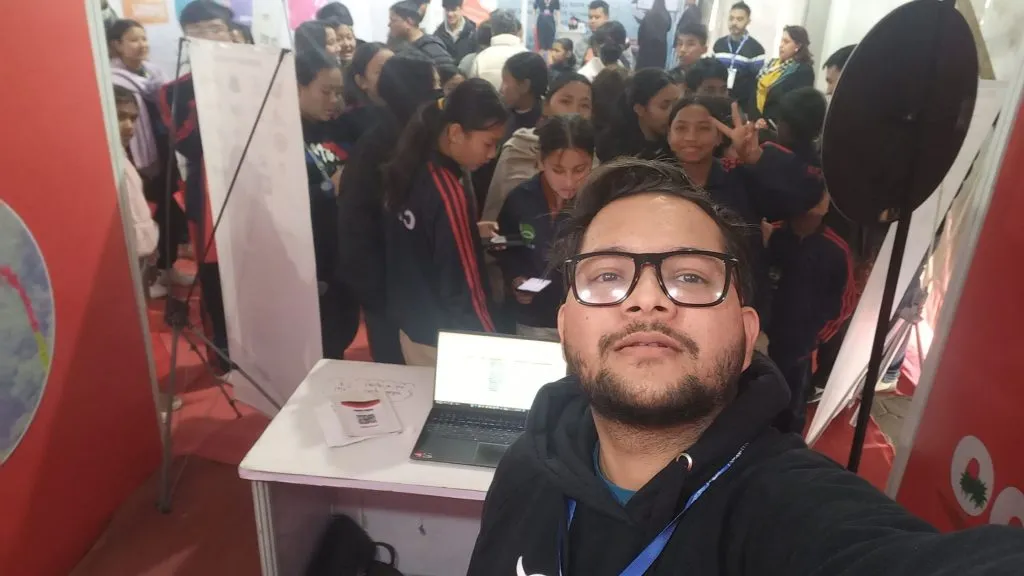
Bimal Raj Paudel at CAN Infotech 2025.
So, what did we do? We A/B tested everything. We looked at the numbers, stopped doing what didn’t work, and poured all our energy into the strategies that were creating actual bookings.
What the Data Told Us: Online Beat Offline Every Time
We deliberately split our budget between offline and online channels to test which drove better results. The answer was unambiguous — online channels significantly outperformed offline for both volume and user quality.
The on-ground event activations are the clearest example. They generated impressive download numbers. But when we looked at what happened next, the picture changed. The majority of these users were students attracted by the event experience, not genuine travellers with intent to book. Uninstall rates from this segment were significantly higher. Booking conversion was near zero.
The lesson: vanity installs — downloads from users who have no genuine intent — are not just useless. They actively hurt your app store ranking signals, inflate your uninstall rate, and drain your acquisition budget. Quality over volume, every time.
Google vs Meta — What We Actually Learned
Once we committed fully to digital, the next decision was which channel to prioritise. We tested both extensively. The results were more nuanced than most app founders expect.
| Google App Campaigns | Meta App Campaigns | |
|---|---|---|
| CPI | Lower | Higher |
| Install volume | Higher | Lower |
| Booking conversion | Lower | Higher |
| Best optimisation target | Install volume | Post-install booking events |
| Best used for | Scale and reach | Quality user acquisition |
Google App Campaigns drove higher download volume at a lower cost per install. When someone searches “flight booking Nepal” or “bus ticket Nepal” on Google, they have clear intent — converting that intent to an install is efficient. For raw volume, Google was our strongest channel.
Meta told a different story. Our CPI on Meta was higher, but the quality of users was significantly better for our core metric — actual bookings. Meta’s interest and behaviour targeting reached Nepali users who were actively planning travel, not just passively browsing. These users were more likely to complete a booking after installing.
The right answer was not Google or Meta. It was both — Google for volume and reach, Meta for quality and conversion. We ran both channels simultaneously with different objectives. This two-channel approach gave us the scale and the quality needed to sustain growth.
Learn more about running Facebook and Meta Ads in Nepal
Travel Mela 2024 drove over 60,000 downloads in a single campaign window. That was the proof of concept we needed.
Never Resting: The Secret to Our Growth
If there is one secret to Trip Turbo’s fast success, it is our extreme curiosity.
We never just did one thing and hoped it worked. We experimented. We knocked on doors. Every single strategic collaboration mattered to us. That zeal to keep trying new things is exactly why we grew so quickly in such a short period.
The launch was so successful that we turned it into a yearly tradition. In 2025, we hosted Travel Mela 2025, which was 2X bigger, bolder, and better!
Building Nepal’s Largest Travel Marketplace (B2C & B2B)
Trip Turbo isn’t just an app for travelers; it is an entire travel ecosystem.
To bring so many packages, accommodations, and activities to our users, we also built our own SaaS (Software as a Service) platform. This means local suppliers and travel agencies can log into the Trip Turbo Supplier Portal to easily list and sell their own activities to hundreds of thousands of users.
Introducing TT Coins
We didn’t just want users to download the app; we wanted to reward them for staying.
That is why we introduced TT Coins, our dedicated loyalty program. For every booking made on Trip Turbo, users earn coins. These coins are real value! They can be redeemed internally to get discounts on your next Trip Turbo booking, or externally with our amazing reward partners.
We are proud to partner with beloved Nepali brands like BigMart, Foodmandu, QFX Cinemas, Safari Bags, and Ultima so our users get the ultimate value out of their travel.
Why TT Coins Changed Our Retention Numbers
The travel category has a specific retention challenge that most app founders underestimate. Unlike a social media app that users open daily, a travel booking app is inherently low-frequency — people don’t book bus tickets every day. Building a reason for users to open the app even when they are not actively planning a trip became one of our core priorities.
TT Coins solved this directly. We also added iMark to our partner ecosystem, giving Siddharth Bank users access to Trip Turbo offers via Siddhartha Bank coins alongside the existing BigMart, QFX, Foodmandu, Safari Bags, Ultima and other more loyalty partners.
The impact was measurable. Several partner offers were 100% redeemed before their deadlines — a clear signal that users genuinely valued the rewards. Internal redemptions for domestic flights and bus bookings were particularly strong, driving repeat booking behaviour from users who might otherwise have lapsed between trips.
TT Coins transformed Trip Turbo from an occasional-use travel app into something embedded in users’ daily consumer lives through the partner ecosystem. That is what retention engineering looks like in practice.
For any Nepal app founder reading this — retention is where most apps lose the battle. The install is the beginning, not the goal. Give users a tangible reason to return even when they are not in active buying mode.
Overcoming Fears & Winning the ICT Award 2025 🏆
Looking back, it has been one hell of a ride.
Personally, I grew every single day. I made a lot of mistakes, but I learned from every single one of them. One of my biggest personal hurdles was public speaking. I used to be incredibly shy, and the thought of speaking on a stage terrified me.
But as Trip Turbo grew, I had to grow with it.
This culminated at the prestigious ICT Awards 2025. I found myself doing something I never thought possible: standing on a stage, holding a microphone, and pitching the vision of Trip Turbo to a panel of expert judges. My voice was shaking at first, but my belief in what we had built pushed me through.
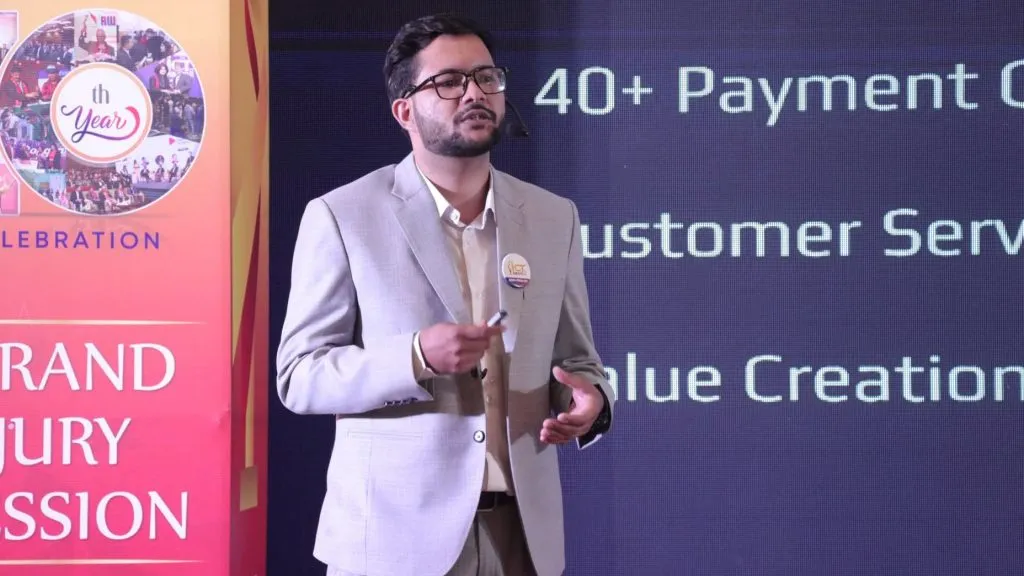
Bimal Raj Paudel at ICT Awards 2025.
And guess what? The people believed in us too. We brought home the highly coveted People’s Choice Award at the ICT Awards. Bringing that trophy home to the team felt surreal. I conquered my own fears, and as a team, we were finally recognized on a national level.
What the ICT Award Meant for Our Growth
We entered the ICT Awards in two categories — the Startup Award, where we reached the top finalist position, and the People’s Choice Award, which we won. The People’s Choice Award is decided by public vote, not by judges. Winning it was a direct signal that Trip Turbo had genuinely penetrated the consciousness of Nepali consumers — people were voting for us because they had used the product and believed in it.
The award also provided significant PR value — coverage in Nepali tech media, social media amplification, and a credibility signal that converted fence-sitters who had heard of Trip Turbo but hadn’t downloaded it yet. Recognition compounds growth. It is not a vanity metric.
Scaling Through Tech Partnerships: The Nabil Bank Integration
While ads and campaigns got us off the ground, our true scale came from smart, high-level business integrations. Every strategic collaboration mattered to us.
One of our absolute proudest milestones was securing a strategic partnership with Nabil Bank.
We integrated Trip Turbo’s travel booking engine directly into the nBank App (Nabil Bank’s mobile banking platform). This meant hundreds of thousands of Nabil Bank customers could suddenly book domestic flights, international flights, and bus tickets seamlessly from within their trusted banking app.
As a growth marketer, this was a game-changer. This B2B2C API integration opened up a massive new acquisition channel, providing us with a surge of high-intent, quality bookings while adding immense value to Nabil Bank’s digital ecosystem.
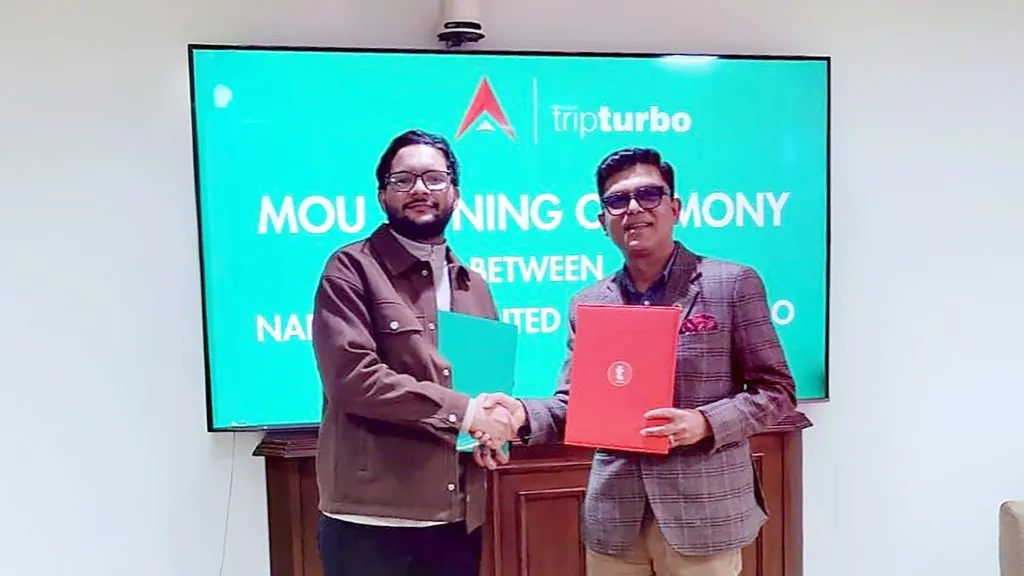
Adarsha Bazgain, Deputy Chief Executive Officer (DCEO) at Nabil Bank Limited and Bimal Raj Paudel, Growth & Marketing Lead at Trip Turbo signing MoU.
Looking Ahead to the Future
Reflecting on this journey in 2026, I feel incredibly proud.
We started with just 2 people trying to figure out marketing, running between vendors. Today, we are a family of more than 35 talented team members with over 500K+ app downloads under our belt.
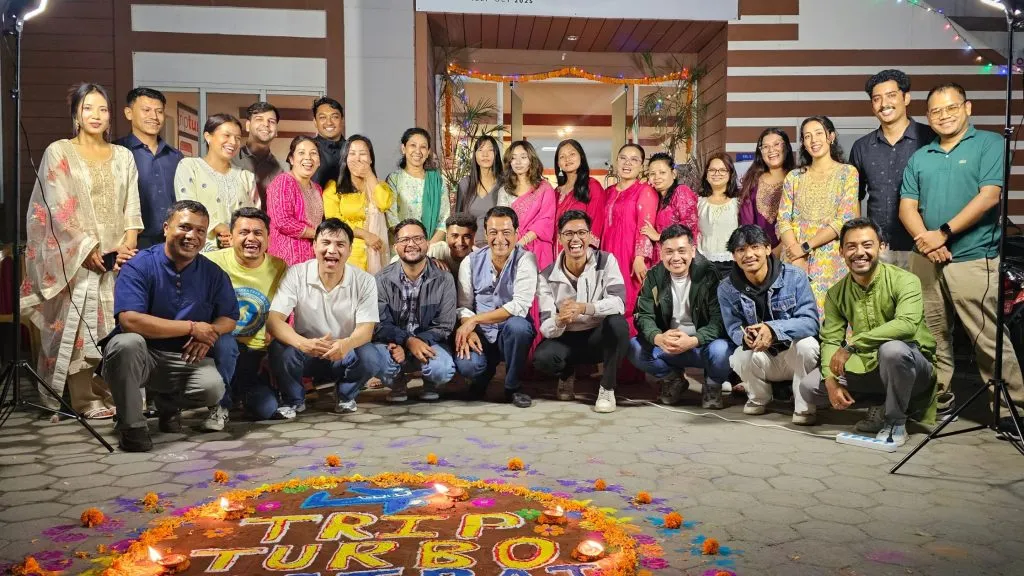
Team Trip Turbo during Tihar 2082.
We went from being a new startup to becoming Nepal’s definitive travel companion. And honestly? We are just getting started.
Planning your next trip? Download the Trip Turbo App on your phone today, or visit us at tripturbo.com and let’s explore Nepal together.
The App Growth Framework: What Actually Drove 500K Downloads
Looking back across the entire journey, the 500K+ downloads were not the result of any single brilliant move. They were the result of a coordinated system working across every growth lever simultaneously.
| Growth Lever | Key Result | Core Learning |
|---|---|---|
| Travel Mela GTM campaigns | 60,000+ downloads per campaign | A big launch event compounds. Run it annually, not once. |
| Google App Campaigns | High volume, efficient CPI | Best for install volume. Optimise toward post-install events. |
| Meta App Campaigns | Lower volume, higher booking quality | Best for conversion. Run alongside Google, not instead of it. |
| TT Coins loyalty programme | Partner offers 100% redeemed, strong repeat bookings | Give users a reason to return between trips. Build a real rewards ecosystem. |
| B2B integrations | Major acquisition spike post-100K | Platform partnerships are more capital-efficient than paid ads at scale. |
| Organic and word-of-mouth | Growing % of total installs over time | Organic grows as brand awareness builds. It is earned through consistent marketing. |
| ICT Award 2025 | PR boost and credibility signal | Industry recognition converts awareness into trust at scale. |
5 Lessons for Nepal App Founders
If you are building or scaling an app in Nepal, here is what I would tell you based on everything Trip Turbo taught us:
1. Launch with a GTM strategy, not just a product release
Trip Turbo was registered in 2021 but did not gain real momentum until early 2024 when we launched with a deliberate, multi-channel Go-to-Market strategy. A product release and a product launch are completely different things. If you are releasing your app without a GTM strategy, you are choosing to grow slowly.
2. Optimise toward quality installs, not install volume
The on-ground event experiment taught us this lesson at real cost. Downloads from users with no genuine intent pollute your data, hurt your app store signals, and burn acquisition budget. Define what a quality user means for your specific app — and optimise toward that metric, not downloads.
3. Retention is a growth strategy, not an afterthought
Acquiring users without a retention plan is filling a leaking bucket. TT Coins was not a nice-to-have feature — it was a core growth mechanism that reduced churn and increased booking frequency. Build your retention strategy before you need it, not after you notice users leaving.
4. Use both Google and Meta — but understand what each does
The mistake most Nepal app founders make is running one channel and concluding it works or doesn’t work based on a single metric. Google drives volume. Meta drives quality. Both are valuable when measured correctly and run with the right objectives.
You need a comprehensive performance marketing strategy instead of choosing one platform.
5. B2B partnerships unlock growth that paid ads cannot
Once you have proven product-market fit, look beyond consumer marketing for your next growth lever. A strategic B2B integration can give you access to a large, high-intent audience that no amount of Facebook ad budget could have reached as efficiently.
Building or scaling a mobile app in Nepal?
I help Nepal app founders build the same kind of growth system that took Trip Turbo to 500K+ downloads — from ASO to paid acquisition to retention strategy. If you want to talk about your app and what it would take to grow it, I am happy to have that conversation.
Talk to Bimal about your marketing strategy